Identifying common insect bites
- Fundamental Foundation

- May 31
- 2 min read
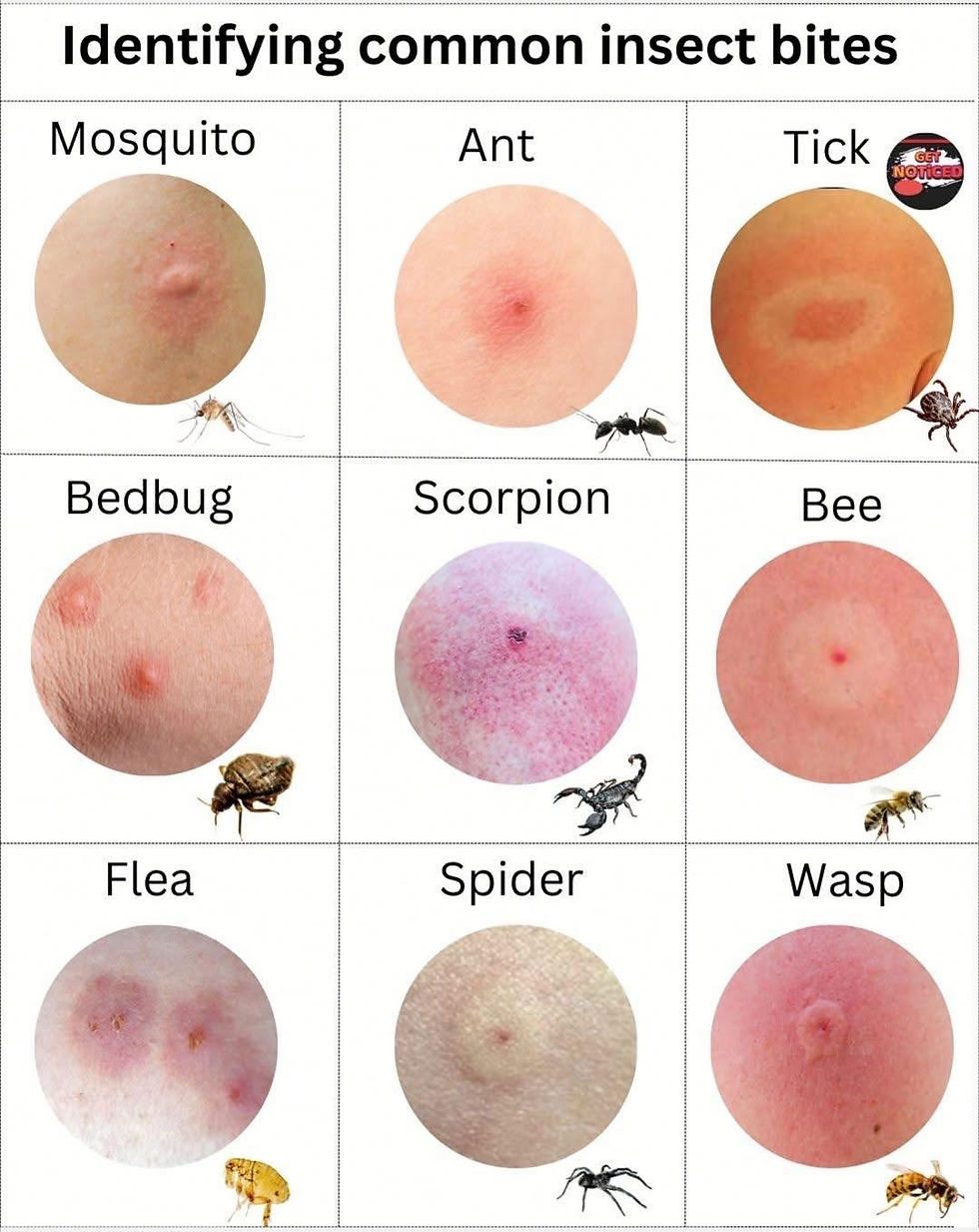
Since the appearance of stings or bites can vary, here is an additional comparison chart for reference.

Identify the Bites: How to Recognize Common Insect Bites
1️⃣ Mosquito Bite: Puffy, light red bump that itches. Don’t scratch!
2️⃣ Ant Bite: Small, bright red bump with burning sensation. Watch for blisters!
3️⃣ Tick Bite: Red with dark center (bullseye). Painless at first—watch for fever.
4️⃣ Bedbug Bite: Clusters of small red bumps, often itchy. Check your neck and arms!
5️⃣ Spider Bite: Red center with swelling. Painful—seek help if it worsens!
6️⃣ Bee Sting: Swollen welt with a puncture. Remove stinger and watch for allergic reactions.
🐜
What to Do After a Bug Bite or Sting:
Stay Calm
Panic can worsen symptoms. Most bites and stings are harmless and manageable at home.
🧴
Basic First Aid Steps
For Most Bites and Stings (Mosquito, Bee, Spider, Ant, etc.):
Clean the Area
Wash gently with soap and water to prevent infection.
Apply a Cold Compress
Use a cold pack or clean cloth with ice for 10–15 minutes to reduce swelling and pain.
Relieve Itching or Discomfort
Apply an over-the-counter anti-itch cream (like hydrocortisone).
Oral antihistamines (like Benadryl) can help reduce allergic response or itching.
Remove Stinger (If Bee Sting)
Use a credit card edge to scrape it out gently — don’t use tweezers (can squeeze more venom in).
⚠️
When to Seek Medical Attention
Signs of allergic reaction, such as:
Trouble breathing
Swelling of face/lips/throat
Dizziness or fainting
Hives spreading across the body
Signs of infection, such as:
Increased redness, warmth, pus, or swelling after a day or two
Spider bite concerns, especially:
Severe pain or ulcer at the site (could indicate a black widow or brown recluse)
Systemic symptoms (fever, chills, cramping)
✅
Pro Tips
Don’t scratch — it increases the risk of infection.
Keep the area clean and dry.
If you live in an area with dangerous insects (like venomous spiders or ticks), monitor symptoms closely.
If the photos or text are unclear—or if you find yourself in an emergency situation—please refer to the video linked below for additional guidance.